
News

Representative Dave Min (D-CA) Warns of Economic Consequences from Stifling Innovation
CF in the News
Published on November 13, 2026
Congressman discusses the life sciences pipeline, immigration and visa stability, and incentivizing innovation
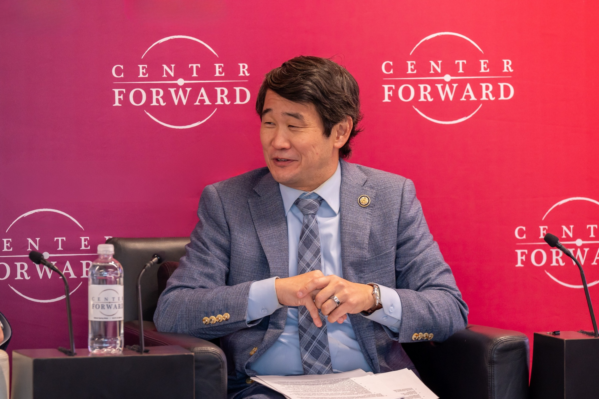
Rep. Dave Min (D-CA) at Center Forward’s Health Summit on Tuesday, November 10, 2026 in Washington, D.C.
Center Forward’s Annual Health Summit once again convened a bipartisan slate of lawmakers for four substantive panels focused on the state of U.S. healthcare policy. The program spotlighted areas where cross-party cooperation remains essential, and guests looked to the future where innovations and new ways of thinking can create tangible differences in driving new solutions, addressing costs, and increasing access.
Congressman Dave Min (D-CA) closed the 2026 Healthcare Summit with remarks on research funding and the R&D ecosystem. As the representative of UC Irvine and a robust life sciences industry, he emphasized the economic impact of the research pipeline and cautioned that the reduced flow of talented students and researchers from abroad will be hard to reverse. A shortage of STEM workers could affect businesses across the country in five to ten years if left unaddressed.
“As a former UC Irvine professor, I’ve seen firsthand how investments in research fuel groundbreaking innovations, create good-paying jobs, and save lives,” said Rep. Dave Min. “America has long been a global leader in science and technology because we’ve invested in our research institutions and attracted the best and brightest minds from around the world. But cuts to federal research funding and uncertainty around student and workforce visas threaten to undermine that leadership and drive talent elsewhere. We cannot afford to fall behind. Congress needs to come together to provide stable, predictable support for research and innovation while addressing the healthcare affordability crisis facing hardworking American families. At the end of the day, our goal should be to ensure that the next generation of medical breakthroughs translates into better, more affordable healthcare for all Americans.”
On bipartisan opportunities, Rep. Min pointed to Medicaid and ACA rollbacks as a potential area for collaboration, arguing constituents want more affordable healthcare regardless of the legislative vehicle. He expressed a broader goal of expanding access to affordable healthcare and changing how care is delivered. On visas and immigration, he called for a more stable system for workforce and student visas from one presidential administration to the next, comprehensive immigration reform, and assurances that researchers who come to the United States are not disrupted midway through their work. He added that the government should regulate and create protections while focusing on incentivizing innovation and growth, rather than simply subsidizing industry. He pointed to bipartisan support for carving small businesses out of overregulation. Min closed by reiterating his goals to improve innovation and access in healthcare, the destination being more important than the vehicle.
Across the board, speakers emphasized how the healthcare space still lends itself to bipartisan progress. Center Forward’s Annual Health Summit affirmed that pragmatic solutions can emerge when Members of Congress come together to support innovation, lower costs, and increase access for all Americans.